
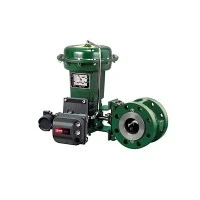
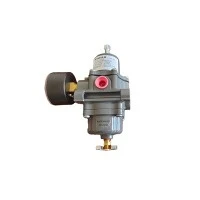
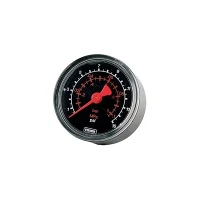
Type 1190 Low-Pressure Tank Blanketing Regulator
video

Type 1190 Low-Pressure Tank Blanketing Regulator

In the chemical, energy, and fine manufacturing industries, storage tanks may appear silent, yet they maintain one of the most delicate balances in the entire process system. They must prevent internal product vaporization while blocking external air ingress; avoid overpressure that could deform...
Send Inquiry
Product Introduction
product-489-297

In the chemical, energy, and fine manufacturing industries, storage tanks may appear silent, yet they maintain one of the most delicate balances in the entire process system. They must prevent internal product vaporization while blocking external air ingress; avoid overpressure that could deform the tank, and prevent vacuum conditions that may cause collapse.

This balance often exists in an extremely low-pressure range-sometimes differing by only a few inches of water column (in. W.C.). It is within this "breath-light" pressure world that the Fisher Type 1190 Low-Pressure Gas Blanketing Regulator plays its role, quietly safeguarding the safety boundary of every tank with precision and reliability.


More Than a Regulator - A "Breathing Controller" for Tanks

From a functional perspective, the Type 1190 is not a conventional pressure regulator. It is a pilot-operated low-pressure regulator specifically designed for tank blanketing systems.

Its operation resembles a highly sensitive stethoscope: the pilot senses minute pressure changes inside the tank and precisely modulates the main valve opening. This allows the regulator to maintain a stable protective pressure at extremely low setpoints.

This design not only prevents structural damage caused by overpressure or vacuum conditions, but also significantly reduces product losses from evaporation while isolating oxygen, moisture, and other contaminants-achieving an elegant balance between safety, environmental protection, and operating efficiency.


Why Pilot-Operated?


In low-pressure control, "low" does not mean "simple." The key advantages of the Type 1190 stem from its pilot-operated design:

  • High sensitivity and fast response: The pilot reacts first, directing the main valve for precise pressure control
  • Ultra-low pressure accuracy: Stable operation starting from as low as 0.25 in. W.C.
  • Minimal pressure droop and fluctuation: Superior stability compared to direct-acting regulators
  • High flow capacity at low pressure: Suitable for both small and large storage tanks
  • Long-term reliability: Proven design, easy maintenance, ideal for continuous 24/7 operation

These characteristics make the Type 1190 not just a component, but a long-term protector of tank integrity.


Where It Works Quietly in the Background


You may never notice it, but the Type 1190 is always there-working behind the scenes in critical containment systems, including:

  • Chemical and petrochemical raw material or intermediate storage tanks
  • Storage of finished fuels, solvents, fragrances, and other volatile liquids
  • Nitrogen blanketing systems
  • Any sealed vessel requiring air exclusion, oxidation prevention, or evaporation control

In these applications, the Type 1190 is not merely part of the process-it is an essential layer of safety.


Key Technical Parameters


To help engineers quickly assess suitability, below is an overview of typical technical data:

Parameter

Description

Product Model

Fisher™ Type 1190

Regulator Type

Pilot-operated low-pressure regulator

Primary Function

Tank blanketing / nitrogen padding

Outlet Pressure Range

0.25 in. W.C. to 7 psi (configurable)

Maximum Inlet Pressure

Up to 300 psig

Applicable Media

Nitrogen, natural gas, and other inert gases

Body Sizes

Multiple sizes available for various flow requirements

Installation

Standard inline piping installation

Behind these figures lies decades of validated engineering experience and global field application.

product-782-543


Selection Is a Tailored Process, Not One-Size-Fits-All


While the function of the Type 1190 is clearly defined, achieving optimal performance requires proper configuration. Body materials, connection types, and pressure ranges must be selected based on tank volume, media properties, operating environment, and applicable safety standards.

In real projects, engineers typically determine the most suitable configuration by evaluating tank design pressure, maximum breathing rate, and nitrogen supply conditions-making selection a deliberate system-level decision rather than a simple component choice.

product-790-521

Pilot-Operated vs. Direct-Acting: A True Performance Divide


A common question in low-pressure applications is: "Why not use a simpler, lower-cost direct-acting regulator?"

The answer lies in accuracy and stability.

  • Direct-acting regulators are suitable for small flows and less demanding pressure control
  • Type 1190, as a pilot-operated regulator, is designed for systems requiring extremely stable pressure, higher flow capacity, and long-term reliability

When storing high-value solvents, flammable liquids, or oxygen-sensitive products, maintaining pressure within a few inches of water column is well worth the investment in a more precise solution.


A Reliable Partner Beyond the Product


Choosing SJWY means more than selecting a regulator-it means gaining a complete support solution:

  • Genuine Emerson Fisher products with global quality assurance
  • Fast delivery with commonly used configurations in stock
  • Professional application support from selection to system integration
  • Full lifecycle service for both new projects and replacement needs

Together, these strengths make the Fisher Type 1190 a trusted and proven solution for low-pressure tank blanketing systems worldwide.


FAQ

Q: What is the main advantage of the Fisher Type 1190 compared to direct-acting regulators?

A:  The Type 1190 offers significantly higher pressure accuracy and stability at very low pressures. Its pilot-operated design minimizes pressure fluctuation and supports higher flow rates, making it ideal for tank blanketing applications where even small pressure deviations matter.

Q: Is the Type 1190 suitable for nitrogen blanketing systems?

A: Yes. The Type 1190 is widely used in nitrogen blanketing applications due to its precise low-pressure control, fast response, and ability to maintain a stable inert atmosphere inside storage tanks.

Q: Can the Type 1190 handle continuous operation?

A: Absolutely. The Type 1190 is designed for continuous 24/7 industrial operation. Its proven pilot-operated structure and robust materials ensure long service life with minimal maintenance.


Hot Tags: type 1190 low-pressure tank blanketing regulator, China type 1190 low-pressure tank blanketing regulator manufacturers, suppliers, factory

Send Inquiry

whatsapp

Phone

E-mail

Inquiry