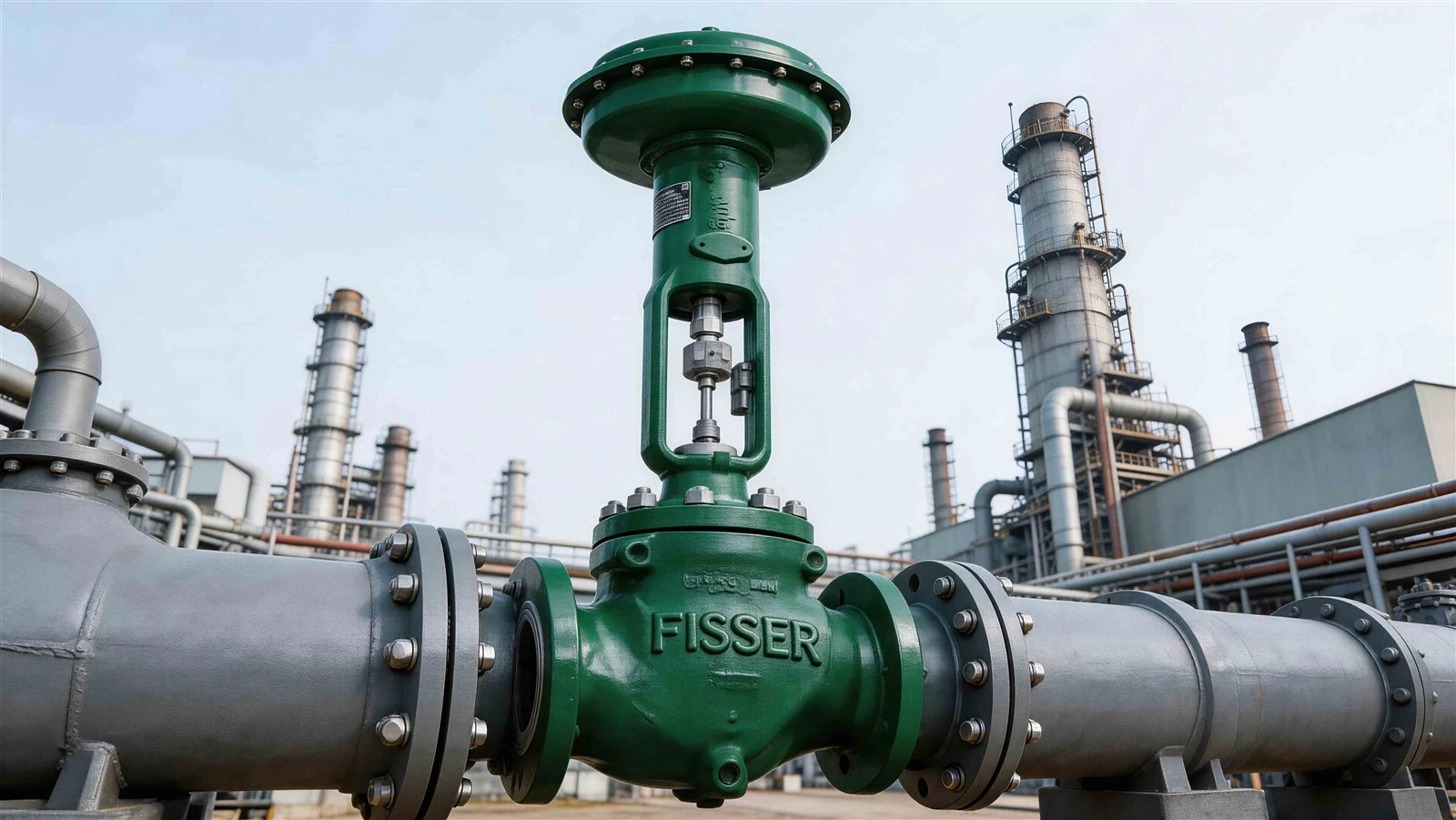

In the previous article, we talked about valve positioner data that maintenance teams usually look at - valve travel, position deviation, cycle count, and air consumption. These values don't mean much on their own. They only become useful when something in valve behavior starts to shift over time. That's usually where friction-related changes begin to show up, and stiction often follows after that.
The valve still moves, but it behaves differently
Most stiction cases don't start with a failure. The valve is still responding to signals and still reaches its target position. From the control system point of view, nothing looks wrong.
But the movement starts to feel different. Small input changes don't always lead to immediate motion. Sometimes there is a delay, then the valve moves more than expected. It doesn't look broken - just inconsistent.
That inconsistency is usually what gets noticed first. Not an alarm, not a shutdown, just a change in how the loop behaves.
Control tuning is usually checked first
When a loop becomes unstable, the controller is usually the first place people look. That's normal. Adjusting PID is quick, and it often improves things for a while.
The issue is that the effect doesn't always last. If the valve itself is introducing resistance, tuning can only compensate temporarily. The behavior usually comes back once operating conditions shift again.
At the beginning, this is not obvious, because the valve is still moving normally.
Stiction develops gradually
There is rarely a single cause behind stiction. Packing is often part of it. Over time, it may tighten or be adjusted in a way that increases friction instead of reducing it.
Mechanical wear also contributes. Parts that move continuously for years slowly lose their original smoothness. Environmental factors like dust, moisture, or process deposits make this even more gradual.
None of these changes happen suddenly. That's why stiction usually builds up instead of appearing all at once.
Early signs are usually small
Before stiction becomes obvious, there are usually small changes in behavior. The response to small signals may slow slightly. The positioner may correct more often. Movement may feel less smooth than before.
None of these are serious on their own. That's exactly why they are often ignored. Most plants don't have the capacity to investigate every small deviation, so the change continues quietly until it becomes visible in operation.
Friction trends matter more than single readings
A single friction value doesn't tell much. What matters is whether it is changing over time.
A stable valve usually stays within a narrow range. When friction slowly increases, it usually means internal resistance is building up. It doesn't mean failure is near, but it does mean the valve is no longer behaving like it used to.
Maintenance decisions are rarely based on one value. They are based on change.
Diagnostics show patterns, not answers
There is no single parameter that directly confirms stiction. What you usually see is a combination of small changes - friction trending up, movement becoming less consistent, position deviation increasing, and correction activity becoming more frequent.
Each of these on its own is not conclusive. But together, they start to point in the same direction: something inside the valve is changing.
Cycle count reflects usage, not condition
Cycle count is often misunderstood. It doesn't describe valve health directly - it describes workload.
Two identical valves can age very differently depending on how often they operate. One may move occasionally, while another is constantly adjusting. Over time, the mechanical stress is not the same.
That's why similar valves can behave differently after a few years of service.
Air consumption changes are easy to overlook
Air usage is not always monitored closely. Small leaks or gradual increases don't usually affect operation, so they go unnoticed.
It often becomes important only when historical data is reviewed. Then the change becomes visible - air consumption has slowly increased without anyone noticing at the time.
That usually leads to closer inspection of the actuator or sealing condition.
Comparison over time is what matters
Most diagnostic data only becomes meaningful when compared with past behavior. A single reading doesn't say much. Trends do.
This is where digital positioners help - not by diagnosing problems directly, but by making gradual changes visible earlier than manual inspection usually can.
When maintenance decisions are made
Early signs of stiction don't always require immediate action. Many valves can continue operating normally for a long time with small changes in behavior.
The key question is whether the trend continues. If friction keeps increasing, or deviation keeps growing, or behavior keeps drifting, then inspection becomes reasonable.
Not because something has failed, but because it is no longer stable.
Closing thought
Stiction rarely appears suddenly. It develops slowly as valve behavior changes over time. The valve still moves, and the process still runs, often without obvious signs of a problem.
It usually becomes visible only when current behavior is compared with how the valve used to behave. That comparison is often where maintenance attention starts - and where unplanned downtime is either avoided, or not.