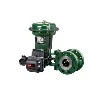

A few years ago, when customers came to inquire about valve positioners, they typically asked about the following points: the signal range, installation, the air source pressure, and whether it could be matched with the existing actuator. Generally, once these are explained clearly, the selection will be decided.
But in the past few years, we have noticed an obvious change - more and more customers will ask: "Does this positioner have diagnostic capabilities?"
As a supplier serving the process industries, we have noticed this question coming up much more often. We are increasingly aware of this kind of problem. Many maintenance teams have begun to value the equipment status data provided by digital valve positioners. In their eyes, the positioner is no longer just a component that controls the movement of the valve, but more like a window to understand the "physical condition" of the valve. They hope to detect abnormalities in advance before the problem affects production.
This change is particularly evident in the project of upgrading old pneumatic positioners. Many engineers no longer only focus on positioning accuracy; they also want the valve's stroke data, operating trends, operating cycles, and all reference information that can help formulate a maintenance plan.
In fact, most valves do not break suddenly. In actual projects, we often encounter situations like this: the response becomes slower, the action is not so smooth, the air consumption is greater than usual, or there is always a slight difference between the actual position of the valve and the set value. When these problems first appear, they may not directly affect production, but it also means that something inside the valve has worn out and its performance is gradually declining.
In the past, these situations were often discovered during regular overhauls, or simply did not attract attention until the valve performance affected normal production. Now, more and more factories hope to identify these hidden dangers in advance.
For companies that are promoting predictive maintenance, the operating data provided by valve positioner diagnostics is also beginning to play an increasingly important role. Many maintenance personnel will use these data to judge the operating status of the valve and arrange subsequent maintenance plans. This is one of the reasons why many projects have begun to consider using digital valve positioners.
For many users, they need not only positioning functions, but also hope to obtain more data that can support maintenance decisions.
Judging from the inquiries in recent years, factories have paid more and more attention to equipment reliability. Last year, many customers felt that the diagnostic function was dispensable. However, when we discussed the project again this year, we found that more and more people would take the initiative to ask about this part. The diagnostic function has gradually become a must-have option in many projects from a nice-to-have feature to a requirement.